



Focusing on growth-stage companies with more than €10M in revenue, the fund aims to help impact-native businesses scale internationally.
Partech Impact Fund was created to fill a structural gap in the European market: providing scale‑up capital and operational expertise to commercially mature companies, often exceeding €10 million in revenue, who need a partner to institutionalise operations and scale across international markets.
Launched by a first-time team, the fund’s closing marks one of the largest debut impact franchise launches in Europe in recent years.
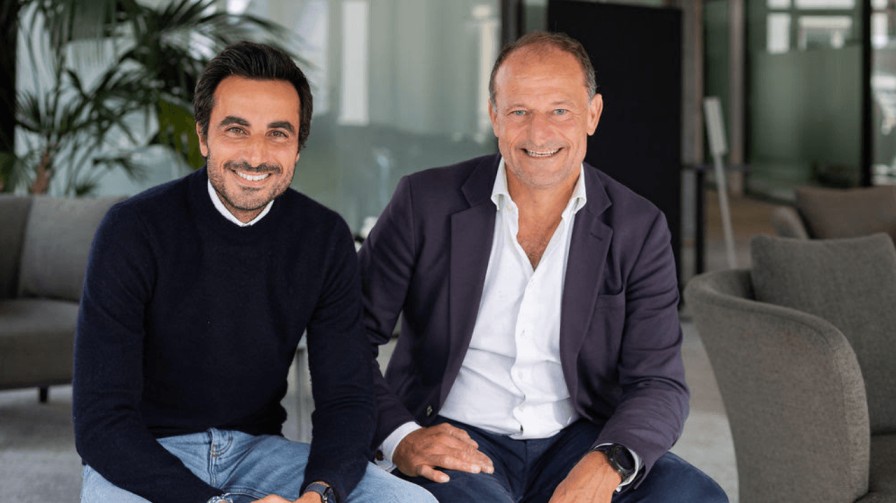
I spoke to Rémi Said, General Partner at Partech Impact, to learn all about it.
Why impact startups face an even bigger funding gap
Said argues that Europe has historically lacked capital at the scaling stage of development for two key reasons. First, more generally, in tech, Europe has historically fallen short because US buyout funds entered the European market very early.
He contends:
“They opened offices and raised funds locally, which meant that instead of the ecosystem developing organically from venture through to growth stages, the buyout players were already present at the top end of the market.”
At the same time, venture capital was already well established in both the US and Europe. As a result, the ecosystem developed strong VC funding in the early stages and large buyout funds in the later stages, but the middle — the scale-up stage — remained relatively underdeveloped. The imbalance becomes even more pronounced in impact investing, which remains a relatively young market.
“Many innovations linked to climate, health, or education only became priorities for governments, corporates, and large institutions about a decade ago.”
This triggered the typical innovation cycle: a wave of startups emerging that required venture capital funding.
As a result, most of the capital in impact over the past ten years has gone into early-stage VC investments. Large US private equity firms have also moved into the impact investing space, launching billion-euro buyout funds and dedicated strategies. However, these funds have often struggled to find sufficiently large, impact-native companies to back.
“Firms like KKR or Apax launched dedicated impact strategies,” explains Said.
“But in many cases, they struggled to find companies that were both large enough and truly impact-native.”
As a result, much of their activity has focused on co-investing alongside their main funds in companies undergoing ESG transitions, rather than supporting businesses that were built around impact from the outset.
“What we often saw instead were investments in companies transitioning toward ESG practices, rather than companies that were impact-native from the beginning,” Said adds.
This dynamic has created a structural imbalance in the market. Early-stage impact innovation has largely been supported by venture capital, while large buyout funds have targeted ESG transition plays. “In between those two ends of the spectrum, there has been a very clear gap,” says Said.
“Growth-stage capital for impact-native companies has simply been missing.”
This is exactly the segment which Partech Impact Fund aims to cover. Said contends that Partech has always liked to be a pioneer in launching new investment strategies.
“We believe this positioning is quite unique today, though in ten years I’m sure we’ll see more funds emerging in this space.”
Backing impact-native companies ready to scale
Partech Impact Fund is designed to back impact-native companies that have already reached commercial maturity, typically generating more than €10 million in revenue and preparing to scale internationally.
It invests across several impact themes, including decarbonisation, agriculture, mobility, health, education, and the circular economy.
Beyond capital, the Partech Impact team integrates deep-rooted private equity discipline with hands-on operational scaling, drawing on experience from Bain Capital, McKinsey, Bridgepoint, and Goldman Sachs. The team supports portfolio leaders on establishing operating systems, driving commercial acceleration and inorganic growth.
A private-equity approach to scaling impact startups
According to Said, the first point of differentiation is Partech Impact’s positioning.
“When an impact-native technology company reaches €7–10 million in revenue and is growing well, it may need €15–25 million of capital to move to the next stage.
In Europe, there are not many funds able to provide that level of funding for companies at this stage. That creates a very specific positioning where we can invest meaningful tickets into commercially proven businesses.”
The second element is the team background.
“Many investors in this space come from venture capital, whereas our DNA is closer to the buyout world.
That experience gives us strong operational expertise.”
When a company reaches €10 million in revenue, it enters a different phase.
The company begins to transition from a founder-led organisation to a management-led organisation. Teams grow larger, coordination becomes more complex, and companies start thinking about topics like governance, organisational structure, and even their first acquisitions. These are areas where the Partech Impact team has significant experience.
“My partner, I, and several members of the team have worked extensively on operational scaling in our previous roles,” shared Said.
“We believe this operational support is extremely valuable for companies at this stage of maturity, and it resonates strongly with founders.”
Building a portfolio across Europe’s impact economy
The fund is already 40 per cent deployed, with investments across several sectors shaping the transition to more sustainable value chains and includes:
- Gireve — supporting the transition to electric mobility through EV charging interoperability infrastructure.
- xFarm — a digital agriculture platform helping farmers adopt more sustainable and data-driven practices.
- Makersite — enabling manufacturers to design more sustainable products using AI-powered lifecycle intelligence.
- FYLD — providing AI-powered field management software for infrastructure and industrial operations.
The importance of investing in “must-have” impact solutions
Impact investing has experienced several hype cycles — from ESG reporting platforms to sustainable mobility and even nuclear technologies — with many companies reaching Series B or later before ultimately failing. I wanted to understand how
Partech Impact evaluates risk when constructing its portfolio. According to Said, there are two levels to consider. At the macro level, there are clear structural trends: the shift toward electric vehicles, the growth of renewable energy, and the push toward decarbonisation.
These trends provide strong tailwinds across multiple sectors. But the real differentiation comes at a much more granular level.
“When we analyse companies, we look very closely at their specific value proposition.”
For example, Makersite focuses on analysing the carbon footprint of manufactured products at the design level. That allows engineers to reduce emissions during the product development phase rather than simply reporting emissions at the company level later.
More broadly, Partech Impact believes that many companies that failed in the past were offering “nice-to-have” solutions rather than “must-have” ones.
“For example, ESG reporting tools or carbon reporting platforms are often perceived by companies as a cost rather than a source of value,” shared Said.
“Our investment philosophy focuses on businesses that generate a direct return on investment for their customers.
Take xFarm as an example. The platform helps farmers reduce CO₂ emissions while improving yields, reducing water use, and lowering the need for chemical fertilisers. That creates a clear economic benefit for the farmer. In that sense, impact and financial value go hand in hand.
When a product delivers immediate operational value, it becomes much more resilient as a business.”
Said contends that impact and financial performance reinforce each other. In other words, generating impact and generating returns are not contradictory goals.
“To reflect that philosophy, we structured our incentives so that both dimensions are equally important.
Our internal incentives are aligned 50-50 between financial returns and impact outcomes. For us, that’s a way to demonstrate that the two can — and should — be pursued together.”
Backed by a diversified and global base of institutional investors across Europe, the US, Asia, and Australia, the Partech Impact Fund attracted numerous existing limited partners, including Allianz, Bpifrance and the MC4 fund operated by Bpifrance on behalf of the State as part of France 2030, British Business Bank, EIF, as well as new limited partners to the Partech platform, including COFIDES, via the Social Impact Fund, Neuberger Berman, KBC, Legrand, QIC, SETT, and Visa Foundation among others.
“Impact‑native companies reaching commercial maturity need investors who bring more than capital”, adds Arnaud Minvielle, General Partner, at Partech.
“They need strategic, operational, and scaling capabilities typically found in private equity. Our Fund was built precisely for this transition phase.”
EIF’s CEO Marjut Falkstedt shared that the EIF is thrilled to support the Partech Impact Fund’s successful final closing, which reinforces our commitment to scaling European tech solutions that generate measurable social progress — from inclusion and education to health and sustainability — and to backing innovators who deliver meaningful impact for communities across Europe.”
“Building a first‑time team and a first‑time fund in this environment was a real test of conviction,” shared Said.
“We are proud to have attracted a world‑class, global LP base and to be backing companies that are shaping more sustainable value chains across Europe, with tangible ROI for their customers; demonstrating that impact and strong economic performance are mutually reinforcing.”


